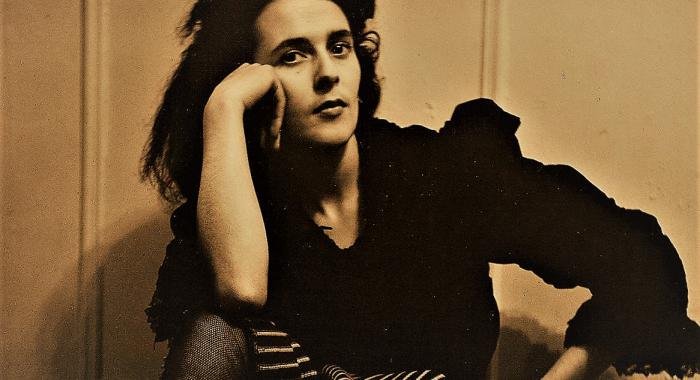

Born in 1929, Yayoi Kusama first made a name for herself on the stage of the New York underground of the 1970s, investing in the fields of performance and fashion,...
The term minimalism was not new, but it grew in the 1960s, specifically describing an artistic style characterized by limitation and simplification.
Originally from New York, minimalism was a reaction against abstract expressionism, but it also embodied constructivist ideas that art should be produced with modern industrial materials. The term was mainly used to describe a group of American sculptors who reassessed the spaces around them, seeking to question the premises and present objects and forms familiar in new ways. On the whole, minimalists felt that art had become academic and obsolete. Without any attempt at representation or illusion, and in a conscious effort to distance themselves from abstract expressionism, they used industrial materials such as bricks or fluorescent lamps, exploring them in new contexts, without symbolism or hidden meaning, without personal expression, artistic competence, other references or distractions - clearly moving away from the traditions of the fine arts. To maintain a sense of objectivity and anonymity, minimalist artists often used mathematical ratios and proportions to allow viewers to re-evaluate art and spaces around forms.
Repetition was a common aspect in the work of minimalists, who created restricted and uniform arrangements with simple geometrical shapes, testifying to extreme parsimony. Generally of great proportions, art emphasized precision, placidity and regularity rather than expression, extravagance and drama.
PRINCIPAL ARTISTS: SOL LEWITT • DONALD JUDD • ROBERT MORRIS • CARL ANDRÉ • DAN FLAVIN