Modern and contemporary art has often been criticized for lacking contact with the general public and for being elitist through hermeticism. Did Paul Klee not declare: “What we will always...
After the Second World War, with the rise of consumerism and media, Pop Art developed in London and New York.
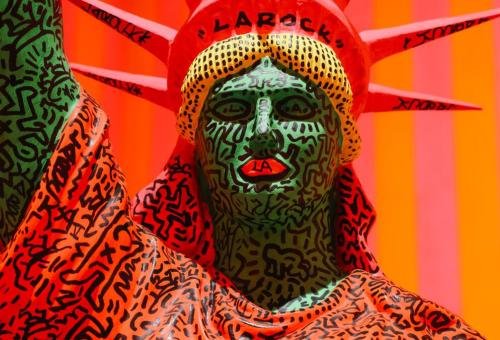
At an exhibition in London in 1956, the word "pop" was used in a collage by Richard Hamilton (1922-2011) with American magazines. The exhibition was organized by the Independent Group, which wished to launch an international debate on contemporary society and cultural aspects. The profusion of mass-produced articles, commercialisms and mass entertainment came to be called popular culture, to differentiate itself from high culture, and this became the focus of interest of the Independent Group. A few years later, New York artists interpreted pop culture in their works, although they were also a reaction against abstract expressionism. Praising and discussing consumerism and commercialism, pop artists, as they became nicknamed, produced colorful images based on advertising, media and consumption, with movie stars, flags, food packaging - things with which everyone could identify, not just a few intellectuals. Deliberately distinct from traditional art, the subjects of Pop Art were bold and accessible, often indifferent to technical mastery. Art addressed post-war society, the adoption of materialism and the blurring of distinctions between commercial art and high art.
Radically different from conventional art, Pop Art reflected the optimism that invaded populations after the Second World War and gained great popularity. With its irreverence and emphasis on contemporary culture, Pop Art shared some aspects of Dadaism, but without aggressiveness. Like pop music, it focused mainly on celebrating the new modernity and a growing generation, although it also had political aspects.

Andy Warhol: a great modern classic and the undisputed master of Pop Art
Another example of critical misunderstanding is the work of Andy Warhol. The media and provocative personality of the painter is certainly for many. We must return again to Marcel Proust's...