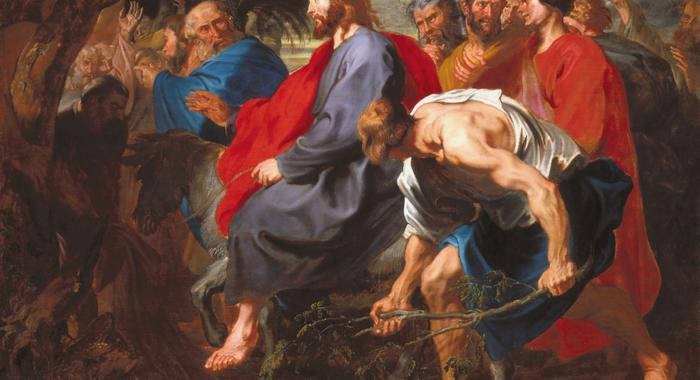
Beginning in the 1520s, a new style of painting emerged in an attempt to perpetuate the artistic achievements of the High Renaissance, often disrupting their harmony in the name of effect and virtuosity.
Derived from the Italian term "maniera," which means fashion or style, mannerism is a pictorial movement that developed between 1510 and 1520 in Italy, among artists who increasingly valued originality above all. The word was intended to describe the level of excellence achieved in the high Renaissance, which all art had to abandon, but in practice it led to the stylization and use of art "to show art," sometimes with great success - as in the work of Raphael's apprentice, Giulio Romano (v. 1499-1546) in Mantua. Mannerism acquired a negative connotation when it became obsessive and when art began to eclipse or obscure what was represented: the Council of Trent, with new rules for sacred art, reacted against the excesses of mannerism. Although the term is mainly applied to Italian art, there was also Nordic mannerism. Northern mannerists include Hendrick Goltzius (1558-1617) and Bartholomeus Spranger (1546-1611), artists of immense talent who created complex and twisted mythological compositions.
Mannerism was a court style, motivated by the need to compete and please autocratic patrons who wanted to use art to show their magnificence. Mannerist painting often seems artificial, with exaggerations including elongated figures, strange poses, luminous effects, unusual perspective and proportions, as well as extravagant colors.
MAIN ARTISTS: PARMIGIANINO • ANTONIO DA CORREGGIO • ROSSO FIORENTINO • PONTORMO • GIULIO ROMANO
There is currently no content classified with this term.