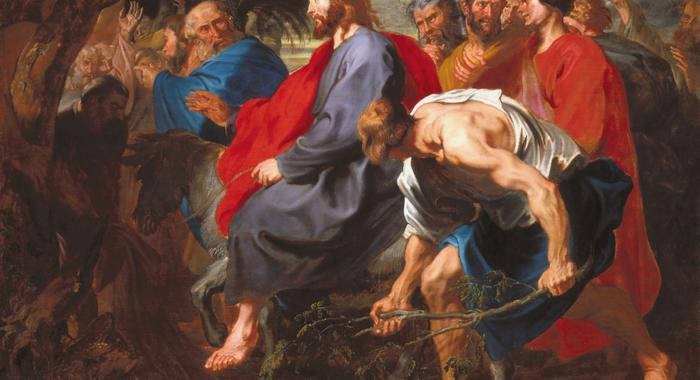
After the revolts of the Protestant Reformation and the Eighty Years' War (1568-1648), an extraordinarily realistic painting style developed in the Netherlands. Religious and political unrest had divided the Netherlands into two nations. Flanders remained Catholic and monarchist, while the Netherlands became a republic and centre of Protestantism. The new Dutch Republic also became the most prosperous nation in Europe. The church was no longer such an important patron, and people began to replace it. From the beginning of the century until about 1660, the artists found and developed a market not only for portraits, but also for small paintings, with modest themes of daily life, for the houses of the new class of wealthy merchants. Still life, genre painting, landscapes and interiors have shown a renewed interest in ordinary things. The philosophy behind this was that, although these things can generally be considered insignificant or trivial, every aspect of God's creation is important and must be appreciated.
Some artistic manifestations of the Dutch Golden Age were characterized by elements called vanitas, which reminded us of the fleeting nature of life and the dangers of the pursuit of pleasure. Portraits also became more widespread, and in addition to the detailed description of the details, the artists became exceptionally skilful in reproducing the luminous effects.
MAIN ARTISTS: REMBRANDT • FRANS HALS • HARMEN STEENWYCK • JOHANNES VERMEER • PIETER DE HOOCH
There is currently no content classified with this term.