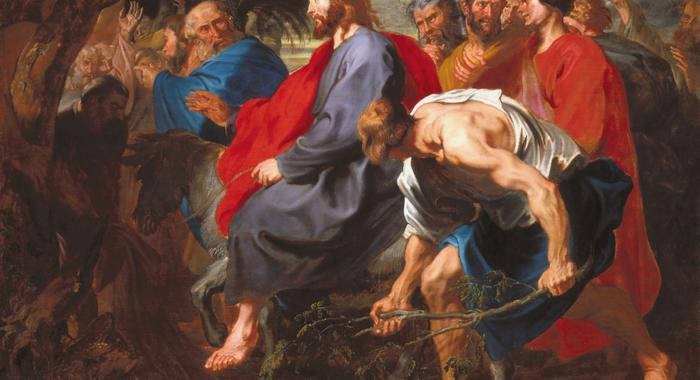
Inspired by the excavations of the ancient Roman cities of Pompeii and Herculanum from 1748, a renewed interest in the arts of antiquity was felt.
Adopting a formal and measured style, neoclassicism developed in the second half of the XVIIE CENTURY, in response to the frivolous sensuality of rococo and illustrating the rational thinking of the "Age of Enlightenment" (or "Age of Enlightenment"). Inspired by ancient Greco-Roman art, the classical historical paintings of the French artist Nicolas Poussin (1594-1665), as well as the ideas of the German painter Anton Raphaël Mengs (1728-1779) and the archaeologist and art historian Johann Joachim Winckelmann (1717-1768), neoclassicism began in Rome but spread rapidly throughout Europe. In 1789, France was on the brink of its first revolution and the neoclassical wished to express their patriotism. They thought that art should be austere and valued drawing rather than painting; Smooth contours and imperceptible brush strokes were the fundamental objective. Painting and sculpture displayed both serenity and restraint, emphasizing heroic themes that expressed noble ideas such as personal sacrifice and nationalism.
Neoclassicism is characterized by the clarity of forms, sober colours and themes drawn from the art and culture of ancient Greece and Rome. Its popularity spread rapidly throughout Europe thanks to the traditional Grand Tour undertaken by young aristocrats to complete their classical education, visiting Paris, Venice, Florence and Rome.
MAIN ARTISTS: ANTON RAPHAEL MENGS • POMPEO BATONI • ANGELICA KAUFFMANN • JACQUES LOUIS DAVID • J.A. D. INGRES
There is currently no content classified with this term.