In the XVTH AND XVITH CENTURIES, Venice was the most powerful city of Italy, having become rich thanks to about thousand years of trade and in the recent acquisition of territories on the continent and of colonies in oriental Mediterranean.
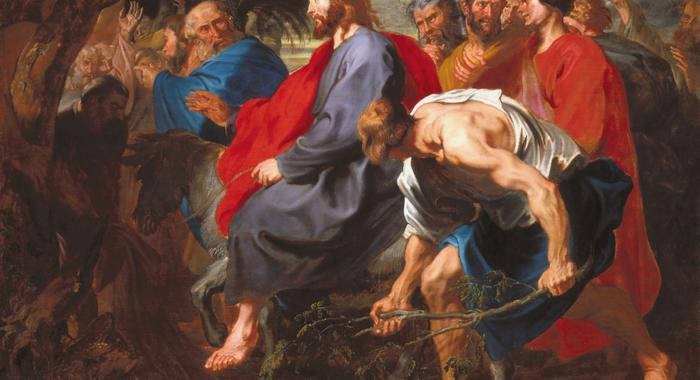
Venetian artists became internationally renowned for their brightly coloured paintings, which exploited new oil painting techniques from the north. The most important artistic dynasty of the first Renaissance in Venice was the Bellini family, composed of Jacopo Bellini (v. 1400-1470) and his sons Gentile (v. 1429-1507) and the great Giovanni (v. 1430-1516), which continued to innovate until an advanced age, as well as the new generation of Giorgione (1477-1510), Titian (1488/1490-1576) and Sebastiano del Piombo (v. 1485-1547). After Giorgione's premature death, Titian was recognized as the greatest painter of the XVIE century, exporting his works to France, Spain and the rest of Italy. Giorgione and Titian were the first artists to use landscapes as important elements in their paintings. The magnificent colouring of Titian (often compared to Michelangelo's "drawing") was continued by Tintoretto (1518-1594) and Paolo Veronese (1528-1588), who initiated the themes and decorations of the baroque palaces of the 17th century.
From the second half of the 15th century, the distinctive style of Venetian painting became apparent, recognized for its bright colors, dramatic perspective, and dynamic compositions. Venetian painters were the first to abandon wooden panels in favor of canvas as a support for oil painting, with a more “loose” finish.
MAIN ARTISTS: GIOVANNI BELLINI • GIORGIONE • TITIAN • TINTORETTO • PAOLO VERONESE • JACOPO SANSOVINO
There is currently no content classified with this term.