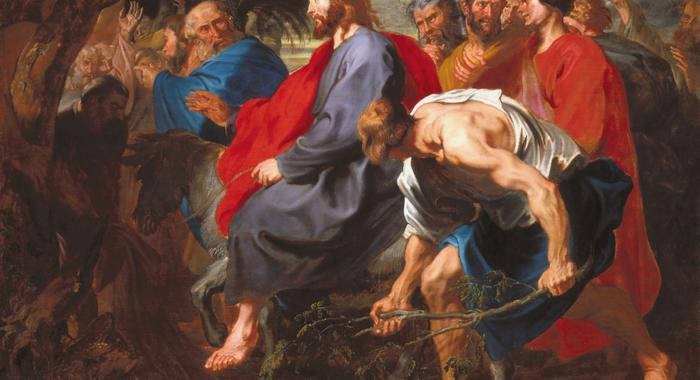
From the end of the fifteenth century, when the pontifical power stabilized in Rome, several popes commissioned works of art and architecture, determined to restore the city to its former glory.
At the beginning of the XVIE century (the period of the High Renaissance), earlier advances led to a harmonious synthesis and a new classical and heroic style for the human figure. Popes Julius II (1503-1513) and Leo X (1513-1521), in particular, commissioned vast and ambitious projects from artists of immense talent, including Raphael (1483-1520) and Michelangelo (1475-1564) with the Vatican Stanze and the ceiling of the Sistine Chapel, where they fully integrate the ideals of humanism and perfect the methods of realism and illusionism. It was believed that the classical past had not only been equalled, but surpassed. Artists had access to highly sophisticated techniques of linear and atmospheric perspective, shortcut, tonal degradation and new bright colors full of "shades" or "shades." Many artists possessed advanced knowledge of anatomy, showed incredible skills in the use of materials, and showed great imagination.
Building on the foundations laid by their predecessors, the artists of the High Renaissance created ambitious compositions using precise perspective effects and carefully observed human figures. Although they venerated classical antiquity, they showed new attitudes toward beauty and harmony - all endowed with extraordinary technical abilities. For the first time, some artists have become famous for their innovations and skills.
MAIN ARTISTS: LEONARDO DA VINCI • MICHELANGELO • RAFAEL • ANDREA SANSOVINO • ANDREA DEL SARTO • PAOLO VERONESE
There is currently no content classified with this term.