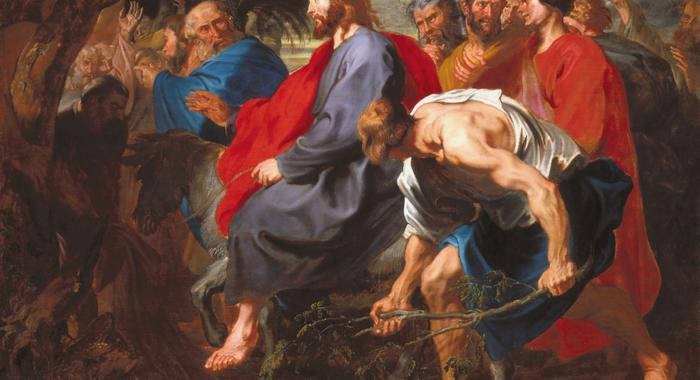
Encompassing the Early Renaissance, the Northern Renaissance and the High Renaissance, the term renaissance describes the "renaissance" of a new interest in the learning and proliferation of the arts in Europe, as well as its development. A surprising amount of Renaissance art and writing survived - and much more was lost.
These new ideas were accompanied by new technologies and techniques, including the discovery of the mathematical laws of linear perspective, the invention of the printing press, a new astronomical system, the production of graphite pencil, the use of oil paint and the smelting of bronze with lost wax. The Renaissance reached its peak in the late fifteenth and early sixteenth centuries, when artists sought to capture human experience and emotion, as well as the beauty and mystery of the natural world. For the first time since classical antiquity, art has become a convincing realism. Religious themes were the most common, while portraits reflected a new sense of self-esteem, and mythological narratives were represented by their moral teachings. The artists attained a prestige equivalent to that of the poets and members of the court: Leonardo da Vinci's genius (1452-1519) was recognized in Florence, Milan, Rome and France, and it is said that Emperor Charles V leaned to pick up the brush of Titian.
Throughout the 15th century, Florence was Italy's most productive artistic centre, often called the "cradle of the Renaissance." But in the 16th century, Rome and Venice had surpassed it in importance, and many other Italian cities - notably Urbino, Mantua, Ferrara, Bologna and Milan - had also developed important artistic "schools."
MAIN ARTISTS: PIERO DELLA FRANCESCA • SANDRO BOTTICELLI • PERUGINO ANDREA MANTEGNA • FILIPPO LIPPI
There is currently no content classified with this term.