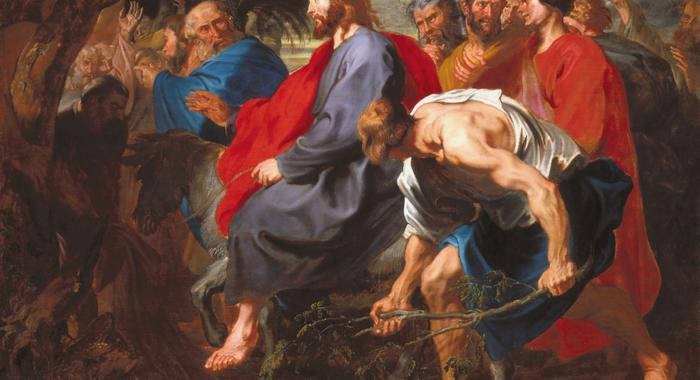
The Nordic Renaissance took place in Europe north of the Alps from the beginning of the XVE century, after a period of multiple artistic influences between north and south known as the "International Gothic."
The great difference between the Nordic and Italian Renaissance was that in the north, the artists did not seek to revive the values of ancient Greece and Rome like their Italian counterparts, while in southern Italy, artists and patrons were dazzled by the wonderful naturalism and intense colours that northern artists could obtain with oil painting, material that had just been developed. Unlike tempera or fresco, traditionally used in Italy, oil painting slowly dries, allowing modifications and the application of fine and translucent layers. The touching religious works and portraits of court figures by Rogier van der Weyden (1399/1400-1464) became a reference in Europe. The complex inventions of Hieronymus Bosch (1450-1516) continue to captivate and intrigue people to this day. In Germany, Albrecht Dürer absorbed the Italian perspective, proportions and anatomy and brought the new art of engraving to an unsurpassed level of quality - and his work was more imitated or copied in Italy than in the north itself. The outbreak of religious conflicts in the XVIE century led to the destruction of much of ecclesiastical art and was disastrous for artistic patronage.
In Northern Europe, with the use of oil painting, religious events (which would arise from the belief that Rome had moved away from Christian values and culminated with the Protestant Reformation), and growing commerce, artists created intensely realistic images expressing strong emotions, with a concern for detail, naturalism and a faithful perspective. Daily life was valued, as was devotion and honesty.
MAIN ARTISTS: JAN VAN EYCK • ROBERT CAMPIN • ROGIER VAN DER WEYDEN • HANS MEMLING • HUGO VAN DER GOES • ALBRECHT DÜRER • PIETER BRUEGEL L'ANCIEN
There is currently no content classified with this term.